

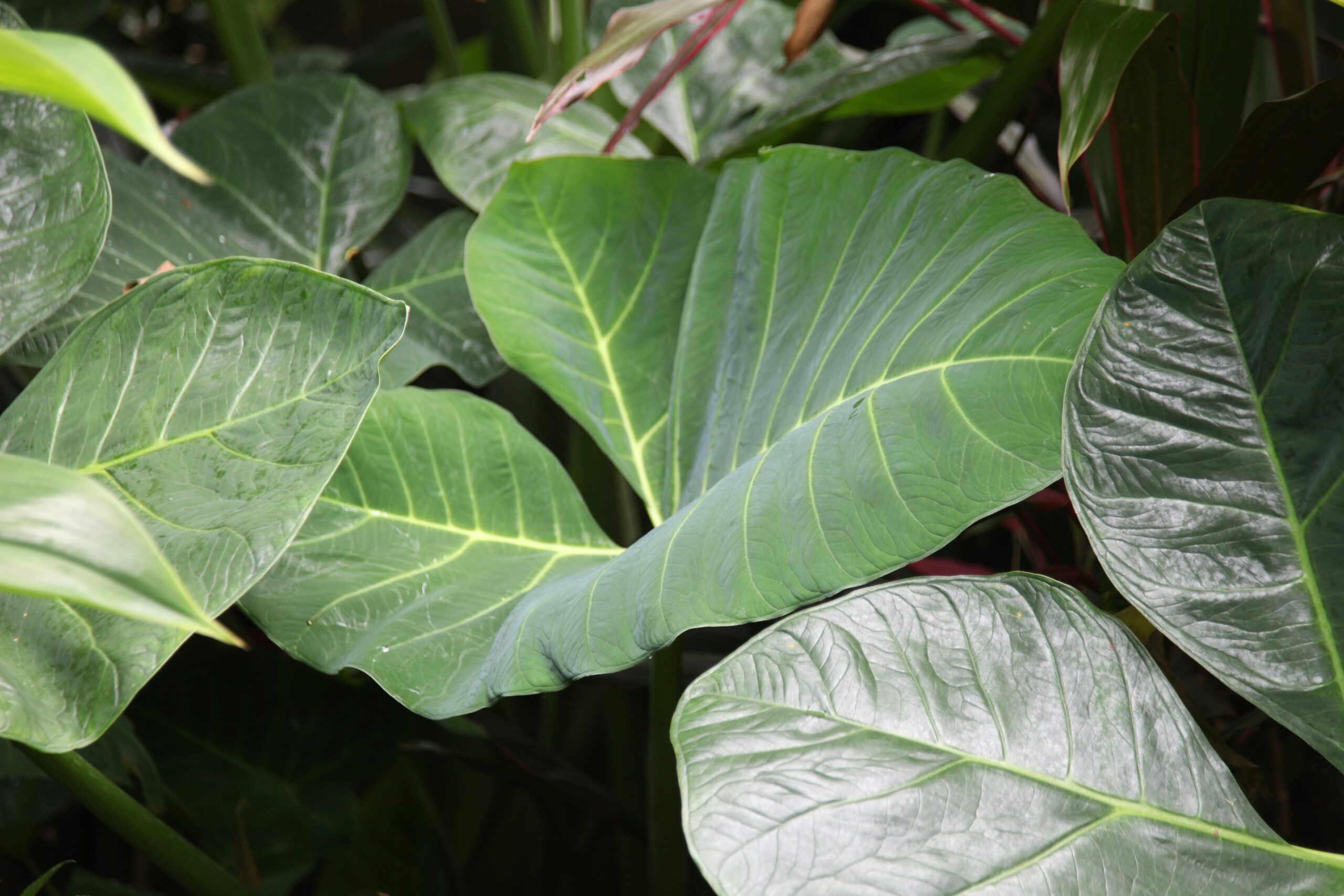
Big leaves. Bold presence. Instant calm. Large-leaf plants don’t just decorate a space—they transform it into a lush, tropical retreat. The best large-leaf indoor plants include Monstera, Fiddle Leaf Fig, Bird of Paradise, Alocasia, and Rubber Plant. These plants add drama, purify air, and visually soften modern interiors when given the right light and care.
Why Large Leaf Plants Instantly Elevate Any Home
Large foliage plants work because they:
- Fill empty vertical space effortlessly
- Create a natural focal point
- Improve air quality and humidity
- Make rooms feel calmer and more luxurious
Interior designers often use one statement plant instead of multiple small ones for a cleaner, high-end look.
1. Monstera Deliciosa (Swiss Cheese Plant)
Why it works: Iconic split leaves, fast growth, forgiving care.
- Light: Bright, indirect
- Water: When topsoil dries
- Best for: Living rooms, open layouts
Pro tip: A moss pole encourages bigger, more dramatic leaves.
2. Fiddle Leaf Fig (Ficus lyrata)
Why it works: Sculptural leaves that scream modern luxury.
- Light: Bright indirect to filtered sun
- Water: Weekly, avoid soggy soil
- Best for: Minimalist and modern homes
Real-world use: Popular in staged luxury homes and Instagram interiors.
3. Bird of Paradise (Strelitzia)
Why it works: Feels like a resort plant indoors.
- Light: Bright light, some direct sun
- Water: Moderate
- Best for: Large rooms with tall ceilings
Bonus: Can grow over 6 feet indoors.
4. Rubber Plant (Ficus elastica)
Why it works: Thick, glossy leaves with bold color.
- Light: Medium to bright
- Water: Low to moderate
- Best for: Busy plant owners
Varieties: Burgundy, Tineke, Ruby.
5. Alocasia (Elephant Ear Plant)
Why it works: Massive, dramatic arrow-shaped leaves.
- Light: Bright indirect
- Water: Consistently moist
- Best for: Statement corners
Watch out: Sensitive to cold drafts.
6. Philodendron Selloum (Hope Philodendron)
Why it works: Dense, tropical look without high maintenance.
- Light: Medium to bright
- Water: Weekly
- Best for: Boho and tropical interiors
7. Banana Plant (Musa)
Why it works: Fast-growing, bold, and lively.
- Light: Bright, indirect
- Water: Frequent
- Best for: Sunrooms and airy spaces
Reality check: Leaves tear naturally—this is normal.
8. Calathea Orbifolia
Why it works: Massive round leaves with striking stripes.
- Light: Medium, indirect
- Water: Filtered or distilled preferred
- Best for: Bedrooms and calm spaces
Bonus: Pet-friendly.
9. Kentia Palm
Why it works: Elegant, arching leaves with hotel vibes.
- Light: Low to bright
- Water: Moderate
- Best for: Corners and entryways
10. Dieffenbachia (Dumb Cane)
Why it works: Large patterned leaves, very adaptable.
- Light: Medium
- Water: Weekly
- Best for: Offices and low-light homes
Pros & Cons of Large Leaf Indoor Plants
| Pros | Cons |
|---|---|
| Instantly elevates décor | Needs space |
| Improves air quality | Some require high light |
| Fewer plants needed | Larger pots cost more |
| Creates calming effect | Can be sensitive to drafts |
How Designers Use Large Leaf Plants (Real Examples)
- Monstera beside sofas to soften sharp furniture lines
- Bird of Paradise near windows for height balance
- Rubber Plants in minimalist homes for contrast
- Palms in corners instead of floor lamps
FAQs – People Also Ask
Which large leaf plant is easiest to care for?
Rubber Plant and Monstera are the most beginner-friendly.
Do large leaf plants improve air quality?
Yes. Plants like Rubber Plant and Fiddle Leaf Fig help filter indoor air.
Can large plants survive in low light?
Some can, such as Kentia Palm and Dieffenbachia, but growth will slow.
Are large leaf plants pet-safe?
Most are not. Calathea and Kentia Palm are safer options for pets.
How big should the pot be?
Choose a pot 2–4 inches larger than the root ball to avoid overwatering.
Final Verdict
If you want your home to feel like a lush indoor paradise, large leaf plants are the fastest and most impactful upgrade. Start with one statement plant, place it strategically, and let nature do the rest.
Bigger leaves. Better vibes. 🌿