

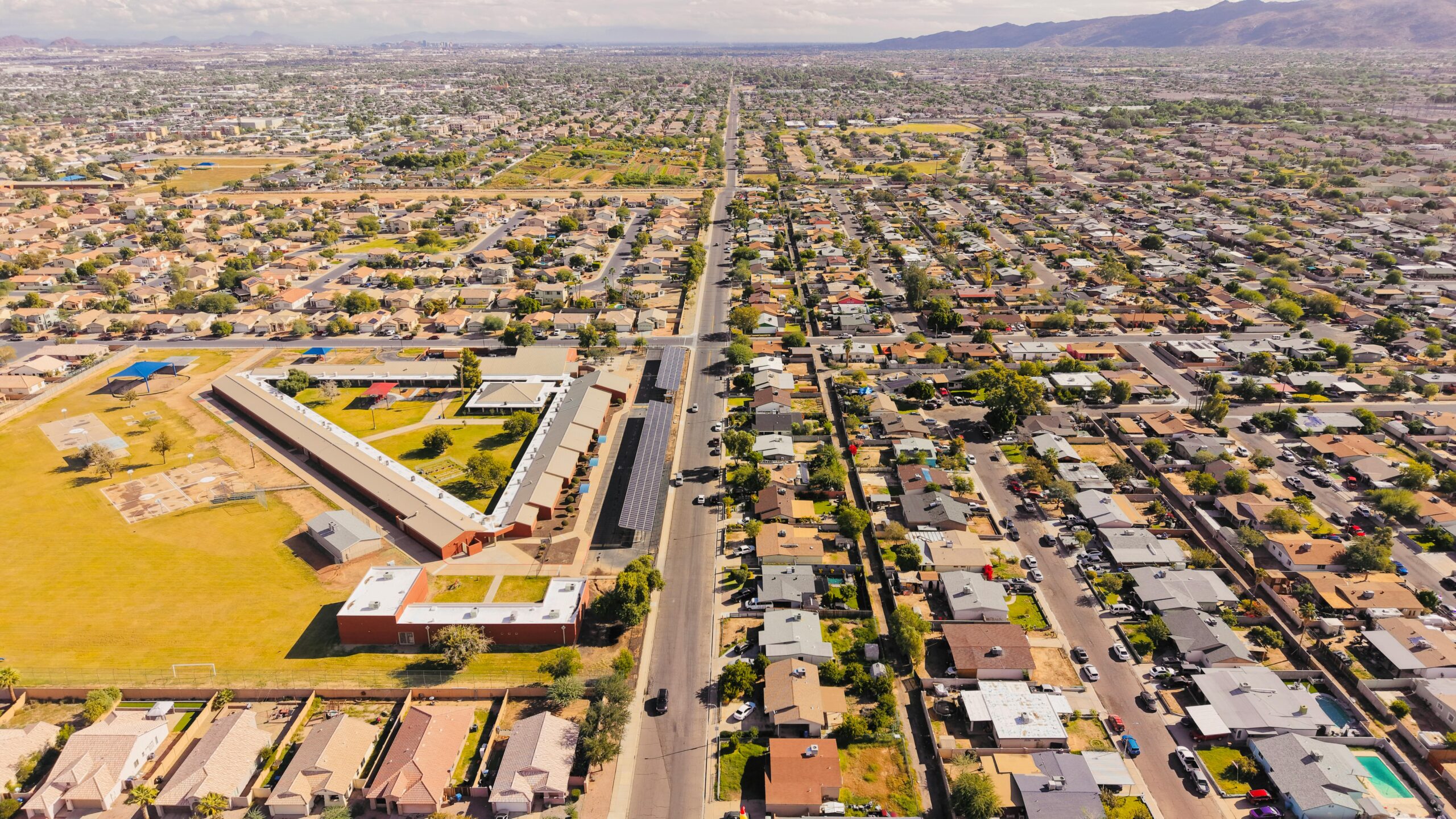
The Phoenix housing market is once again moving faster than the United States average in 2026, driven by steady population growth, limited housing supply, and a job market that keeps attracting new residents. While many U.S. cities are seeing slower price growth and longer selling times, Phoenix continues to post stronger home values, quicker sales, and resilient buyer demand—though affordability pressures are real and shaping buyer behavior.
Why Phoenix is outperforming the national housing market in 2026
Phoenix has a history of housing cycles that swing wider than the national average. In 2026, however, the gap is again tilting in Phoenix’s favor.
Demand is still outpacing supply, even as mortgage rates remain higher than the ultra-low levels of the early 2020s. Add in strong migration trends and job growth, and you get a market that keeps moving when others pause.
Let’s break down what’s happening—and why it matters.
Phoenix vs. national housing trends: a 2026 snapshot
Across much of the country in 2026, the housing market looks cautious. Buyers are price-sensitive. Sellers are negotiating more. Inventory is slowly improving.
Phoenix is different.
Key contrasts in 2026:
- Home prices: Phoenix prices are rising modestly but consistently, while many U.S. markets are flat.
- Days on market: Homes in Phoenix are still selling faster than the national average.
- New construction: Building is active, but not fast enough to meet demand.
- Migration: Phoenix continues to attract out-of-state buyers at higher levels than most metro areas.
This doesn’t mean Phoenix is immune to market pressure. It means the city has stronger fundamentals pushing it forward.
Population growth keeps fueling housing demand
One of the biggest reasons Phoenix keeps outperforming is simple: people keep moving there.
Why people are still choosing Phoenix
- Lower cost of living than coastal cities (even after recent price gains)
- Strong job opportunities, especially in tech, healthcare, logistics, and manufacturing
- Warm climate and lifestyle appeal
- Business-friendly environment that attracts employers
Even in 2026, when remote work is more normalized and migration has slowed nationally, Phoenix remains a top destination for domestic movers.
Each new household adds pressure to housing supply—and Phoenix is not building fast enough to fully catch up.
Housing supply remains tight in key Phoenix neighborhoods
Inventory levels are improving nationwide, but Phoenix still struggles with supply constraints in desirable areas.
What’s limiting supply in 2026
- Land availability near employment hubs is shrinking
- Construction costs remain elevated
- Zoning and permitting timelines slow new developments
- Many homeowners are holding onto low-rate mortgages and choosing not to sell
As a result, buyers compete most fiercely for:
- Entry-level single-family homes
- Well-located townhomes
- Updated homes in established neighborhoods
This imbalance keeps prices supported—even when buyer budgets are stretched.
Home prices in Phoenix: steady growth, not a spike
Phoenix is not seeing the explosive price jumps of past boom years. That’s actually a good thing.
What price growth looks like in 2026
- Single-digit annual appreciation
- Fewer bidding wars than earlier cycles
- More price discipline from buyers
- Sellers pricing more realistically
Compared to the national market—where some areas are seeing slight price declines—Phoenix’s steady growth stands out.
This kind of market is healthier. It rewards long-term owners without creating the instability that follows rapid spikes.
Mortgage rates matter—but Phoenix buyers are adapting
Mortgage rates in 2026 are higher than historic lows, but they are no longer shocking buyers.
How Phoenix buyers are adjusting
- Choosing smaller homes or townhomes
- Moving slightly farther from city centers
- Using rate buydowns or adjustable-rate options
- Putting down larger deposits when possible
Importantly, many Phoenix buyers are dual-income households or cash-rich relocators, which softens the impact of rates.
Nationally, higher rates have sidelined more buyers than they have in Phoenix.
Investor activity remains stronger than average
Phoenix continues to attract real estate investors in 2026, though the mix has changed.
What investor demand looks like now
- Fewer short-term flippers
- More long-term rental investors
- Strong interest in build-to-rent communities
- Focus on suburbs with population growth
Rental demand remains strong due to affordability challenges for first-time buyers. This keeps investor interest alive, especially compared to slower U.S. markets.
Rental market strength supports home values
Phoenix’s rental market is a quiet but powerful force behind housing demand.
Why rentals matter in 2026
- Rising rents make buying more attractive long-term
- Investors see reliable cash flow
- New residents often rent before buying
- Limited apartment supply in some areas supports pricing
While rent growth has cooled compared to peak years, Phoenix rents are still outperforming national averages, reinforcing property values.
Job growth gives Phoenix a competitive edge
Housing markets follow jobs. In 2026, Phoenix continues to add employment faster than many metros.
Key employment drivers
- Technology and data centers
- Healthcare systems and medical research
- Advanced manufacturing
- Logistics and warehousing
- Financial and professional services
This job diversity protects Phoenix from downturns tied to any single industry. A stable job market means buyers feel more confident committing to homeownership.
Pros and cons of the Phoenix housing market in 2026
| Pros | Cons |
|---|---|
| Strong population growth | Affordability pressures |
| Faster price growth than U.S. average | Higher mortgage rates |
| Healthy job market | Hot summers impact demand for some buyers |
| Solid rental demand | Limited inventory in prime areas |
| Long-term growth outlook | Insurance and utility costs rising |
Real-world examples: how buyers and sellers are navigating 2026
First-time buyer example
A dual-income couple moving from California chooses a townhouse in a Phoenix suburb. While prices are higher than expected, they still spend less than they would back home. They accept a slightly longer commute in exchange for affordability.
Seller example
A homeowner who bought in 2018 lists their property in 2026. The home doesn’t sell in a weekend, but it sells within a month at a fair price—something sellers in many U.S. cities can’t say.
Investor example
A long-term investor buys a new build rental property. Cash flow is modest at first, but strong rent demand and steady appreciation support the investment case.
How Phoenix compares to other fast-growing U.S. metros
Many Sun Belt cities saw growth earlier in the decade. By 2026, some are cooling faster than Phoenix.
Why Phoenix stands out:
- Larger, more diverse economy
- Established infrastructure
- Broader housing stock
- Continued in-migration rather than short-term spikes
This helps Phoenix maintain momentum when other markets level off.
What could slow Phoenix’s housing market?
No market rises forever. Phoenix faces real risks.
Potential headwinds
- Prolonged high interest rates
- Sharp job losses nationally
- Overbuilding in outer suburbs
- Rising costs for insurance, water, and utilities
So far, these factors are acting as brakes—not barriers. They slow growth but don’t reverse it.
What buyers should know before purchasing in Phoenix in 2026
- Be realistic about budget limits
- Compare neighborhoods, not just prices
- Expect some negotiation—but not fire-sale pricing
- Get pre-approved early
- Think long-term, not short-term gains
Phoenix still rewards patient buyers who plan to stay several years.
What sellers should know in 2026
- Pricing correctly matters more than ever
- Homes still sell—but overpricing leads to delays
- Move-in-ready properties perform best
- Professional presentation makes a difference
Sellers in Phoenix remain in a stronger position than sellers in many U.S. cities.
FAQs: Phoenix housing market in 2026
Is Phoenix still a good place to buy a home in 2026?
Yes, if you’re buying for long-term living or investment. Short-term speculation is riskier, but fundamentals remain solid.
Are home prices in Phoenix dropping?
No. Price growth has slowed, but values are holding and rising modestly compared to national trends.
Is Phoenix becoming unaffordable?
Affordability is a challenge, especially for first-time buyers. However, Phoenix remains more affordable than many coastal markets.
Will Phoenix housing crash?
There is no sign of a crash in 2026. The market shows signs of stabilization, not collapse.
Is now a good time to sell in Phoenix?
Yes, if your home is priced realistically and well-prepared. Demand remains strong compared to the national market.
Final verdict: Phoenix continues to lead in 2026
The Phoenix housing market outpaces national trends again in 2026 because its core drivers—population growth, job creation, and limited supply—are still firmly in place. While higher rates and affordability concerns have cooled the frenzy, they haven’t stopped momentum.
For buyers, Phoenix offers opportunity with careful planning.
For sellers, it remains one of the more forgiving markets in the country.
For investors, long-term fundamentals still make sense.
In a year when much of the U.S. housing market is catching its breath, Phoenix is still moving forward—just at a smarter, steadier pace.
[…] This guide explains what a tortellinatrice is, how it works, who should use one, and how to choose the right model. If you want perfect tortellini without frustration, you’re in the right place. […]