

Choosing a low-maintenance kitchen countertop is not just about looks. For many homeowners, maintenance is the real deal-breaker. No one wants to spend weekends sealing stone, scrubbing stains, or worrying about every spill. That’s why this question comes up so often:
This guide breaks it down in clear, practical terms. We’ll compare popular countertop materials based on daily care, durability, stain resistance, heat tolerance, and long-term upkeep. No fluff. No confusing jargon. Just real-world advice to help you pick a countertop that stays beautiful with minimal effort.
What “Low-Maintenance” Really Means for Countertops
Before naming a winner, let’s define what low-maintenance actually looks like in a busy kitchen.
A truly low-maintenance countertop should:
- Not require sealing
- Resist stains and moisture
- Handle heat and scratches well
- Clean easily with basic soap and water
- Look good for years with minimal care
If a surface needs special cleaners, frequent resealing, or constant babying, it doesn’t qualify.
Quick Verdict: The Most Low-Maintenance Countertop Overall
Quartz countertops are widely considered the most low-maintenance kitchen countertop available today.
Why?
- No sealing—ever
- Highly stain-resistant
- Non-porous and hygienic
- Easy to clean
- Strong and long-lasting
But quartz is not the only option worth considering. Depending on budget, style, and cooking habits, other materials may also work well.
Let’s explore them one by one.
Quartz Countertops: The Low-Maintenance Champion
What Is Quartz?
Quartz countertops are engineered stone surfaces made from about 90–95% natural quartz mixed with resins and pigments. This process creates a dense, non-porous slab.
That non-porous nature is the key reason quartz wins the low-maintenance crown.
Why Quartz Is So Easy to Maintain
Quartz checks almost every box homeowners care about:
- No sealing required
- Resists stains from coffee, wine, oil, and spices
- Doesn’t absorb water or bacteria
- Cleans easily with mild soap
Spills sit on the surface instead of soaking in. Wipe and move on.
Durability for Daily Use
Quartz holds up well against:
- Everyday scratches
- Normal kitchen heat (with trivets)
- Heavy use from cooking and prep
You don’t need to treat it gently. That makes it ideal for families, busy households, and rental properties.
Design Flexibility
Quartz comes in hundreds of colors and patterns. Many designs closely mimic marble or granite without the maintenance headaches.
You get style and convenience.
Downsides of Quartz
No material is perfect. Quartz has a few limitations:
- Can be damaged by direct high heat
- Slightly more expensive than laminate
- Not ideal for outdoor kitchens
Still, for indoor kitchens, quartz remains the easiest option to live with.
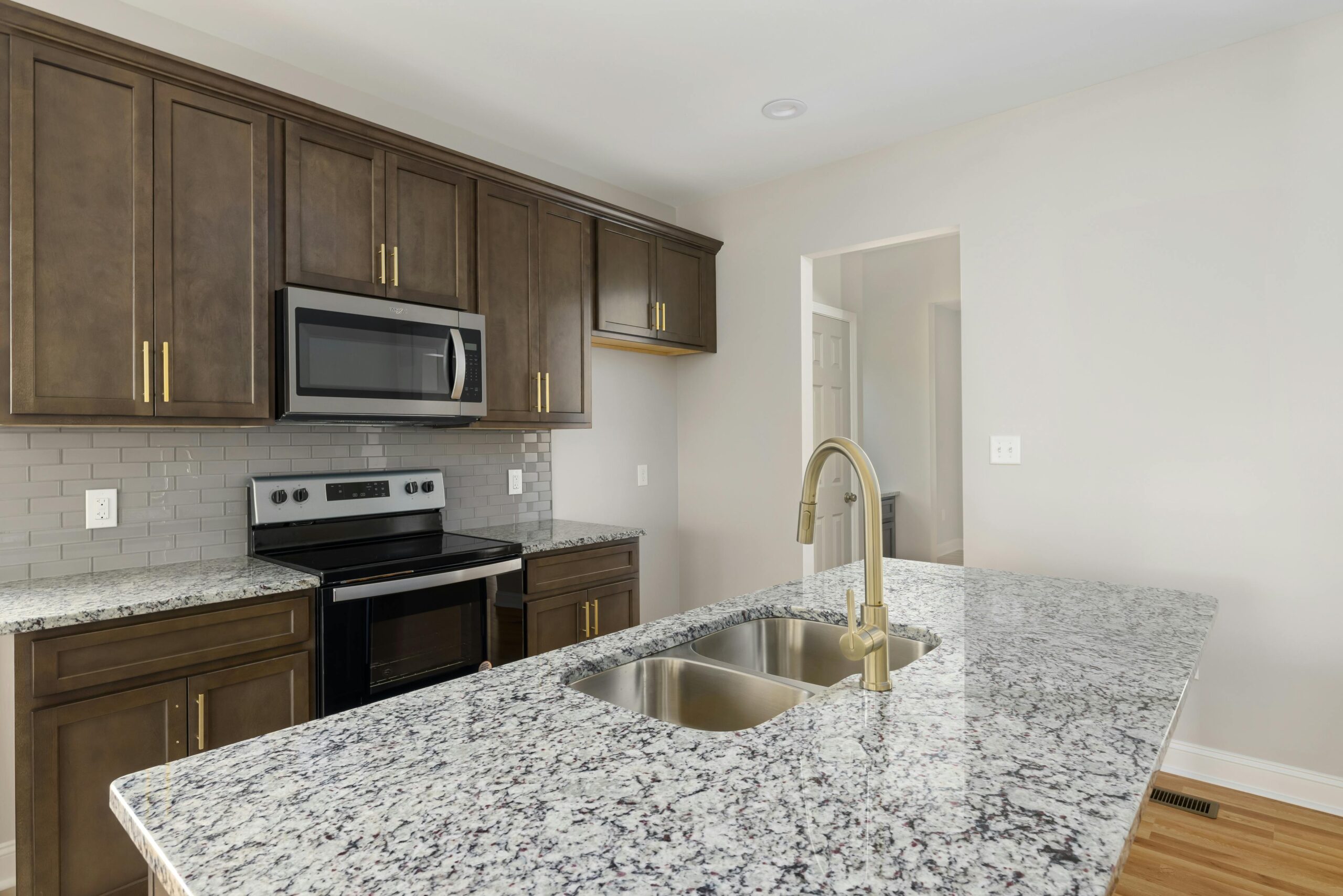
Granite Countertops: Durable but Higher Maintenance
Granite is a natural stone known for strength and beauty. It’s popular—but not the lowest maintenance.
Why Granite Needs More Care
Granite is porous, which means:
- It must be sealed every 1–3 years
- Spills can stain if left too long
- Acidic foods may dull the finish
If you skip sealing, problems show up fast.
Maintenance Level
- Regular sealing required
- Gentle cleaners recommended
- Immediate cleanup of spills
Granite is durable, but it demands attention.
When Granite Makes Sense
Granite may still work if:
- You don’t mind periodic sealing
- You love natural stone patterns
- You want high heat resistance
It’s not difficult—just not truly low-maintenance.
Laminate Countertops: Budget-Friendly and Easy
Laminate often gets overlooked, but it deserves serious consideration for low upkeep.
Why Laminate Is Easy to Maintain
- Non-porous surface
- No sealing required
- Simple cleaning with soap and water
- Resistant to most stains
Daily care couldn’t be simpler.
Limitations to Know
Laminate is not as durable as quartz:
- Scratches more easily
- Can’t handle high heat
- Damage is hard to repair
Once it chips or burns, replacement is often the only fix.
Best Use Cases for Laminate
Laminate works well for:
- Rental homes
- Guest kitchens
- Tight budgets
- Light cooking use
It’s low-maintenance—but not heavy-duty.
Solid Surface Countertops: Seamless and Simple
Solid surface countertops (often known by brand names) are made from acrylic or polyester blends.
Low-Maintenance Benefits
- Non-porous
- No sealing needed
- Seamless installation
- Easy daily cleaning
They also resist bacteria and moisture well.
Repair Advantage
Small scratches and burns can often be sanded out, which extends lifespan.
Downsides
- Less heat-resistant
- Can scratch more easily than quartz
- Slightly artificial appearance
Still, for easy care, solid surface materials rank high.
Porcelain Countertops: Low Maintenance with High Performance
Porcelain countertops are gaining popularity fast.
Why Porcelain Is Low-Maintenance
- Non-porous
- Highly stain-resistant
- Heat-proof
- UV-resistant
They don’t need sealing and clean easily.
Where Porcelain Shines
- Modern kitchens
- Outdoor kitchens
- High-heat cooking environments
Drawbacks
- Higher cost
- Limited edge profiles
- Installation requires skill
Porcelain is low-maintenance but may stretch budgets.
Marble Countertops: Beautiful but High Maintenance
Marble is stunning—but demanding.
Why Marble Is Not Low-Maintenance
- Highly porous
- Stains easily
- Etches from acids
- Requires frequent sealing
Even water can leave marks.
Best for Whom?
Marble suits homeowners who:
- Love natural aging
- Don’t mind imperfections
- Accept ongoing care
If maintenance is your priority, marble is not the right choice.
Concrete Countertops: Custom but Care-Heavy
Concrete offers a bold, modern look, but maintenance varies.
Maintenance Considerations
- Requires sealing
- Can crack
- Stains if seal fails
Some finishes improve durability, but upkeep remains higher than quartz.
Stainless Steel Countertops: Surprisingly Low Maintenance
Often seen in commercial kitchens, stainless steel deserves a mention.
Easy Care Benefits
- Non-porous
- Heat resistant
- Hygienic
- Simple cleaning
Downsides
- Scratches easily
- Shows fingerprints
- Industrial appearance
For minimal care and maximum hygiene, it’s a strong contender.
Comparing Countertops by Maintenance Level
Here’s a quick summary to make decisions easier.
Lowest Maintenance Options
- Quartz
- Porcelain
- Laminate
- Solid Surface
- Stainless Steel
Moderate Maintenance
- Granite
- Concrete
High Maintenance
- Marble
- Soapstone (oiling required)
Daily Cleaning Tips for Low-Maintenance Countertops
Even easy-care surfaces last longer with smart habits.
- Wipe spills quickly
- Use mild soap and water
- Avoid harsh chemicals
- Use cutting boards
- Use trivets for hot pans
Simple steps go a long way.
Which Low-Maintenance Countertop Is Best for You?
The “best” option depends on your lifestyle.
Quartz If You Want:
- Minimal effort
- Long-term durability
- Stylish options
- Family-friendly surfaces
Laminate If You Want:
- Lowest upfront cost
- Easy cleaning
- Temporary or rental use
Porcelain If You Want:
- Heat resistance
- Outdoor use
- Modern style
Final Answer: What Is the Most Low-Maintenance Kitchen Countertop?
For most homes, quartz countertops are the most low-maintenance choice.
They require no sealing, resist stains, clean easily, and hold up well to daily kitchen life. While other materials may cost less or offer specific advantages, quartz delivers the best balance of ease, durability, and appearance.
If your goal is a countertop that looks great without constant care, quartz is hard to beat.
Quick Takeaway
If you want to cook, entertain, and live without worrying about your countertops, choose a surface that works for you—not against you. Low maintenance isn’t a luxury anymore. It’s smart planning.
If you’d like, I can also help compare costs, lifespan, or best brands for low-maintenance countertops. Just say the word.
[…] drooling, also called nocturnal drooling, happens when saliva escapes from your mouth while you’re asleep. Instead of being swallowed, saliva pools and leaks […]