

If you heat your home with wood—or plan to—you’ve probably heard the term “cord of firewood.” But what does it actually mean? How much wood is in a cord? And just as important, how should you store it so it stays dry and burns efficiently?
This guide breaks it down in simple, practical terms. By the end, you’ll know exactly what you’re buying and how to protect your firewood investment.
What Is a Cord of Firewood?
A cord is the standard unit used to measure firewood volume in many countries. It refers to a tightly stacked pile of wood that measures:
- 4 feet high
- 4 feet deep
- 8 feet long
That equals 128 cubic feet of wood and air space combined.
Visual Example of a Full Cord
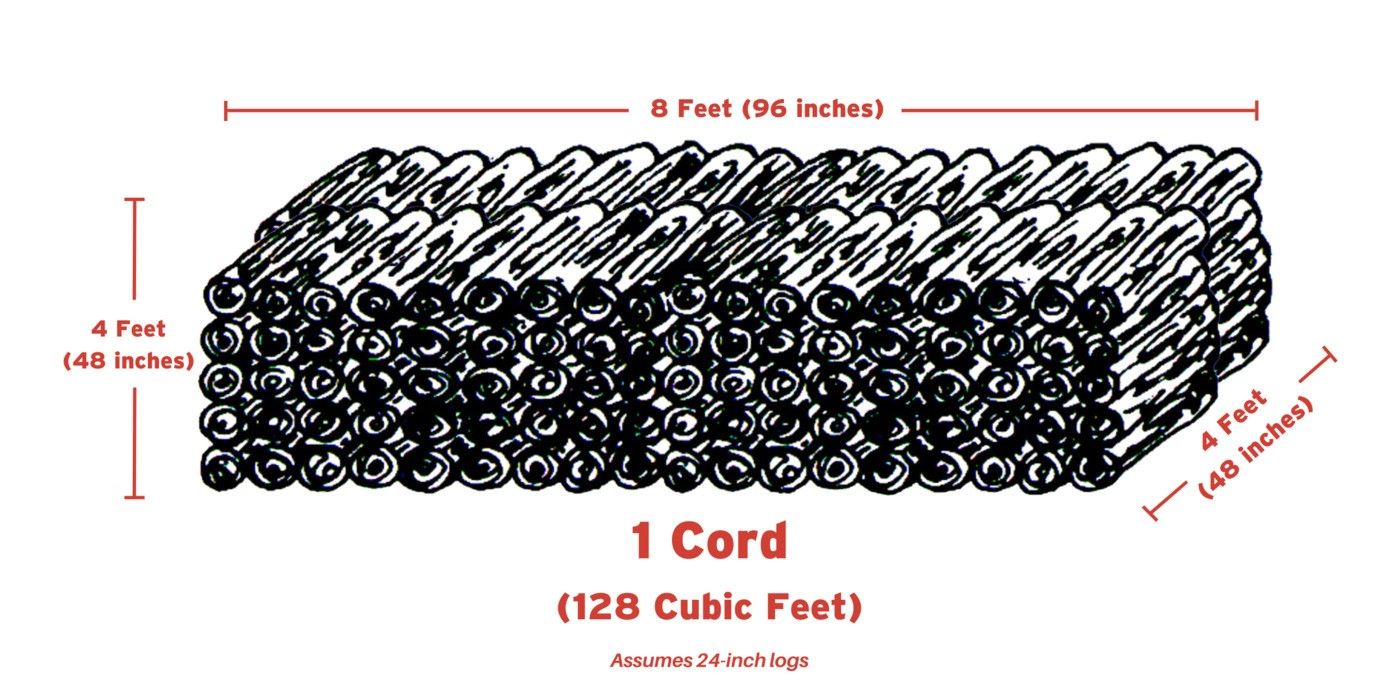
4
👉 Important: A cord measures volume, not weight or number of logs. The actual number of pieces depends on log size and how tightly the wood is stacked.
How Many Pieces of Wood Are in a Cord?
There is no exact piece count because logs vary in length and thickness. However, you can estimate.
Typical piece counts
- 16-inch logs: about 600–800 pieces
- 18-inch logs: about 500–700 pieces
- 24-inch logs: about 300–500 pieces
The tighter the stacking, the more pieces fit into a cord.
Why the count varies
Several factors affect the number of logs:
- Log diameter
- Length of each split
- Type of wood
- How tightly it’s stacked
For example, thick oak splits take up more space than thin pine pieces.
Different Types of Firewood “Cords”
When buying wood, you may hear terms that sound similar but mean different amounts. Knowing these prevents overpaying.
1. Full Cord (Standard Cord)
This is the official measurement:
- 128 cubic feet
- Stack size: 4 × 4 × 8 feet
Always confirm sellers mean a full cord, not a partial measure.
2. Face Cord (or Rick)
A face cord is NOT standardized. It usually means:
- 4 feet high
- 8 feet long
- Depth equals log length
Because depth varies, the total volume changes.
Example volumes
- With 16-inch logs → about 42.6 cubic feet (⅓ cord)
- With 24-inch logs → about 64 cubic feet (½ cord)
⚠️ Many buyers get confused here. Always ask for the depth of the stack.
3. Half Cord
As the name suggests:
- 64 cubic feet
- Exactly half of a full cord
Stack size might be:
- 4 × 4 × 4 feet
- or another configuration totaling 64 cubic feet
4. Quarter Cord
A quarter cord equals:
- 32 cubic feet
- One-fourth of a full cord
Good for occasional fireplace use.
How Much Does a Cord of Firewood Weigh?
Weight varies widely depending on wood species and moisture content.
Average weights (seasoned wood)
- Hardwoods (oak, hickory): 3,500–5,000 lbs per cord
- Medium woods (maple, birch): 2,500–3,500 lbs
- Softwoods (pine, fir): 2,000–2,800 lbs
Why moisture matters
Fresh-cut (green) wood can weigh 30–50% more than seasoned wood. It also burns poorly.
👉 Always choose seasoned firewood when possible.
How Long Will a Cord of Firewood Last?
This depends on how often you burn wood.
Typical usage estimates
- Occasional fireplace use: 1 cord can last an entire winter
- Supplemental heating: 2–3 cords per winter
- Primary wood heat: 4–8 cords per winter (cold climates)
Factors that affect burn rate
- Home size
- Insulation quality
- Stove efficiency
- Outdoor temperature
- Wood species
Dense hardwoods like oak burn much longer than softwoods.
How to Measure a Cord of Firewood Yourself
If you’re buying from a local seller, it’s smart to verify the amount.
Step-by-step method
- Stack the wood neatly (don’t measure loose piles).
- Measure height, depth, and length in feet.
- Multiply the three numbers.
Formula:
Height × Depth × Length = Cubic feet
Example
- Height: 4 ft
- Depth: 4 ft
- Length: 8 ft
4 × 4 × 8 = 128 cubic feet (1 full cord)
Best Way to Store Firewood
Buying good wood is only half the job. Poor storage can ruin it fast.
Proper storage keeps wood:
- Dry
- Pest-free
- Easy to burn
- Efficient
Let’s walk through the right approach.
Step 1: Choose the Right Location
Where you store wood matters more than most people think.
Ideal firewood location
- Sunny spot
- Good airflow
- Slightly elevated ground
- Away from the house (at least 5–10 feet)
Avoid these locations
- Directly on soil
- Damp shaded areas
- Against house siding
- Inside unventilated sheds
Moisture and poor airflow are your biggest enemies.
Step 2: Keep Firewood Off the Ground
Ground contact pulls moisture into the wood and invites insects.
Good base options
- Wooden pallets
- Pressure-treated runners
- Gravel bed
- Firewood racks
Example of Proper Elevated Stacking
4
👉 Even lifting wood 2–4 inches off the ground makes a big difference.
Step 3: Stack Firewood Correctly
How you stack wood affects drying speed and stability.
Best stacking practices
- Place bark side up (for rain shedding)
- Stack in straight rows
- Leave small gaps for airflow
- Keep stack height manageable (4–5 feet max)
Cross-stack the ends
At the ends of the pile, alternate log directions. This:
- Improves stability
- Helps airflow
- Prevents collapse
Step 4: Cover the Top — Not the Sides
This is one of the most common mistakes.
Do this
- Cover only the top with tarp or metal roofing
- Leave sides open to air
Avoid this
- Wrapping the entire pile in plastic
- Sealing wood in airtight sheds
Wood needs airflow to finish seasoning.
Step 5: Allow Proper Seasoning Time
Fresh wood rarely burns well.
Typical seasoning times
- Softwoods: 6–12 months
- Most hardwoods: 12–24 months
- Dense oak: up to 24–36 months
Signs wood is seasoned
- Ends are cracked
- Wood sounds hollow when knocked
- Bark loosens easily
- Moisture content below 20%
Common Firewood Buying Mistakes
Avoid these expensive errors.
❌ Buying “truckload” instead of by the cord
A truckload has no standard volume. Always ask for cord measurements.
❌ Not asking if wood is seasoned
Green wood:
- Burns poorly
- Produces more smoke
- Creates dangerous creosote
Always confirm the wood has been dried.
❌ Accepting loosely dumped wood
A cord must be stacked tightly to equal 128 cubic feet.
Loose piles can be misleading.
❌ Storing wood against the house
This invites:
- Termites
- Ants
- Rodents
- Moisture damage
Keep stacks at least several feet away.
Firewood Storage Safety Tips
Safety matters just as much as dryness.
Keep these in mind
- Maintain stable stacks
- Don’t stack too high
- Keep clear of walkways
- Watch for snakes or pests
- Keep indoor supply small
Indoor wood storage should only hold a few days’ supply.
Quick Reference: Cord of Firewood Facts
Full cord size: 4 × 4 × 8 feet
Total volume: 128 cubic feet
Typical weight: 2,000–5,000 lbs
Average pieces: 300–800 logs
Seasoning time: 6–24 months
Best moisture level: below 20%
Final Thoughts
Understanding how much firewood is in a cord helps you buy smarter and avoid being shortchanged. A full cord always equals 128 cubic feet, but the number of logs and total weight vary based on wood type and size.
Storage is just as important as measurement. Keep your wood:
- Off the ground
- Covered on top
- Open on the sides
- In a sunny, breezy spot
Do this right, and your firewood will burn hotter, cleaner, and more efficiently all winter long.