

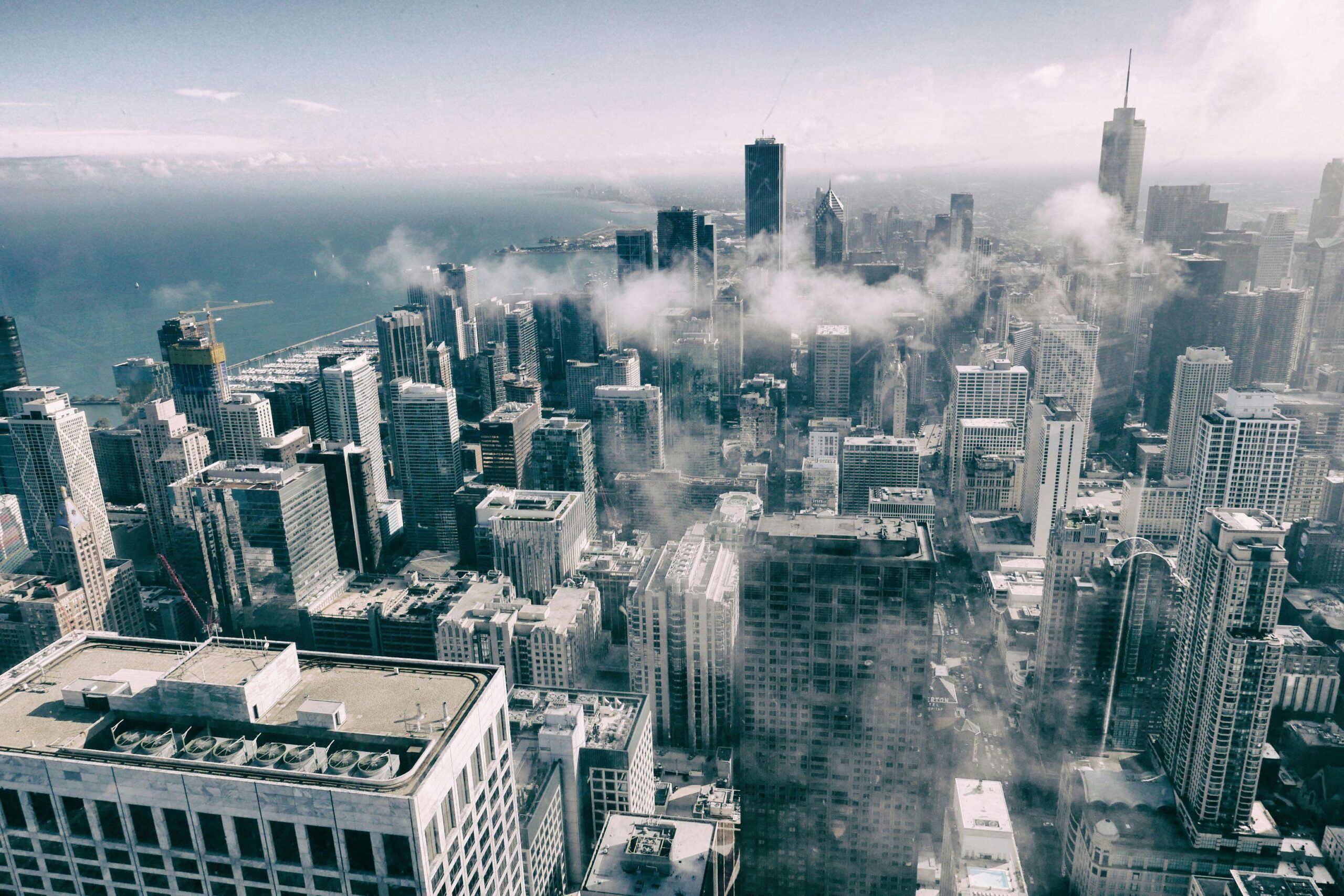
Over the last 100 years, futuristic architecture has shifted from bold, machine-driven fantasies to people-focused, sustainable, and tech-integrated design. What started as utopian sketches is now real, livable space shaped by climate needs, digital tools, and social values.
A Quick Look Back: What “Futuristic” Meant in the 1920s
In the early 20th century, futuristic architecture was all about breaking from the past.
Architects imagined:
- Towering skylines
- Sharp angles and exposed steel
- Buildings that looked like machines
Movements like Bauhaus focused on function over decoration. Visionaries such as Le Corbusier believed buildings should work like efficient engines for modern life.
Key idea: the future was fast, industrial, and mechanical.
Mid-Century Dreams: Space Age Optimism (1950s–1970s)
After World War II, hope returned. Architecture began to mirror space exploration and scientific progress.
Common features included:
- Curved forms and domes
- Elevated walkways and megastructures
- Cities designed for cars, not people
Concepts like plug-in cities and floating neighborhoods gained attention, even if most stayed on paper.
Reality check: Many designs ignored human comfort and social connection.
Late 20th Century: From Fantasy to Feasibility (1980s–1990s)
Technology finally caught up with imagination.
Computers allowed architects to:
- Model complex shapes
- Experiment with new materials
- Build what once seemed impossible
Designs became more expressive. Buildings turned into landmarks rather than just shelters.
A turning point came with architects like Zaha Hadid, whose flowing, gravity-defying forms redefined what futuristic buildings could look like.
21st Century Vision: Smart, Sustainable, Human
Today’s futuristic architecture is less about spectacle—and more about responsibility.
Modern priorities include:
- Energy efficiency
- Climate-resilient design
- Smart building systems
- Natural light and green spaces
Cities like Dubai showcase this shift, blending advanced technology with ambitious architecture such as the Burj Khalifa.
The future now means living better, not just building bigger.
How Technology Changed the Game
Digital tools transformed architecture faster than any style movement.
What made the difference:
- 3D modeling & AI: Faster, smarter design decisions
- Sustainable materials: Lower carbon footprint
- Smart sensors: Buildings that adapt to users
Futuristic buildings now respond to people instead of overpowering them.
Pros & Cons: Then vs Now
| Aspect | Past Visions | Modern Visions |
|---|---|---|
| Creativity | Extremely bold | Purpose-driven |
| Human comfort | Often ignored | Central focus |
| Sustainability | Rarely considered | Core requirement |
| Feasibility | Mostly conceptual | Highly practical |
| Tech use | Limited | Fully integrated |
Real-World Examples of the Shift
- 1920s: Skyscrapers symbolized industrial power
- 1960s: Space-inspired cities imagined total automation
- Today: Eco-districts blend nature, tech, and community
A modern “futuristic” home might feature solar panels, passive cooling, and flexible living spaces—ideas barely considered a century ago.
FAQs: People Also Ask
What defines futuristic architecture today?
Sustainability, smart technology, adaptability, and human well-being.
Why did early futuristic designs fail?
They focused more on visual impact than real human needs.
Is futuristic architecture expensive?
Not always. Smart design often reduces long-term energy and maintenance costs.
Will future cities look uniform?
Unlikely. Local culture and climate now play a major role in design.
Final Verdict
Futuristic architecture has grown up.
What once chased dramatic visuals now prioritizes how people live, work, and connect. The future isn’t about towering metal dreams anymore—it’s about buildings that respect the planet, adapt to technology, and feel good to live in.
The most futuristic architecture today feels surprisingly human.
[…] POP ceiling is a type of false ceiling made using Plaster of Paris, a fine white powder mixed with water and applied over a metal framework. Once dry, it forms a smooth, solid […]