

Japanese knotweed is one of the most feared invasive plants in the world. Homeowners worry about property damage. Buyers fear legal issues. Gardeners panic when they see tall canes and heart-shaped leaves. Because of this fear, many harmless or even useful plants are wrongly labeled as Japanese knotweed. This article clears that confusion.
Drawing on real-world landscaping experience, field identification knowledge, and ecological research, this guide explains which plants are commonly mistaken for Japanese knotweed, how to tell them apart, and why correct identification matters. The goal is simple: help you avoid unnecessary stress, costs, and ecological harm.
This is a human-friendly, expert-level resource designed for homeowners, surveyors, gardeners, and anyone who wants accurate answers—without jargon or fluff.
Why Japanese Knotweed Is So Often Misidentified
Japanese knotweed has a strong reputation. In many regions, it is linked to:
- Reduced property value
- Mortgage and insurance issues
- Expensive professional removal
- Long-term monitoring requirements
Because of this, people often assume the worst when they see a fast-growing plant with bamboo-like stems.
Misidentification usually happens because:
- Many plants grow quickly in spring
- Several species have hollow stems or large leaves
- Seasonal changes can alter a plant’s appearance
- Online photos lack context and scale
Understanding the key traits of true Japanese knotweed is the first step toward avoiding mistakes.
Key Identification Features of True Japanese Knotweed
Before we look at mistaken plants, let’s briefly establish what Japanese knotweed actually looks like.
Core Characteristics
Japanese knotweed typically shows these traits:
- Hollow, bamboo-like stems with visible joints (nodes)
- Zigzag stem growth between leaves
- Shield- or heart-shaped leaves with a flat base
- Creamy white flower clusters in late summer
- Dense growth forming tall thickets
- Thick underground rhizomes (roots) that spread aggressively
If one or more of these traits are missing, the plant may not be knotweed.
Why Correct Identification Matters
Misidentifying a plant as Japanese knotweed can cause real harm.
Financial Consequences
- Paying for unnecessary surveys or treatment
- Reduced property value due to false reports
- Delays in property sales
Environmental Damage
- Killing native or beneficial plants
- Using herbicides where they are not needed
- Disrupting local ecosystems
Legal and Planning Issues
In some regions, knotweed must be declared during property sales. A mistake on record can be difficult to remove later.
Correct identification protects your wallet, your land, and the environment.
Plants Commonly Mistaken for Japanese Knotweed
Below are the most frequently confused plants, explained clearly and practically.
1. Himalayan Balsam
Why It Gets Confused
Himalayan balsam grows tall, fast, and in dense stands—often near water, just like knotweed.
Key Differences
- Stems are soft, not woody
- Leaves are long and narrow, not heart-shaped
- Flowers are large, pink, and orchid-like
- Plant dies back completely in winter
Important Note
Himalayan balsam is invasive, but it does not damage structures like knotweed. Control methods differ.
2. Russian Vine (Mile-a-Minute)
Why It Gets Confused
Russian vine grows rapidly and can overwhelm fences, walls, and trees, creating panic for property owners.
Key Differences
- It is a climber, not a self-supporting cane
- Leaves are arrow-shaped, not shield-shaped
- Flowers are small and white but more scattered
- No thick underground rhizome system
Russian vine looks aggressive but does not spread underground like knotweed.
3. Bamboo Species
Why It Gets Confused
Bamboo has hollow stems and nodes, which instantly remind people of knotweed.
Key Differences
- Leaves are narrow and grass-like
- Stems grow straight, not zigzag
- No heart-shaped leaves
- Often planted intentionally
Some bamboo species spread aggressively, but their growth pattern and leaf shape are very different.
4. Dogwood Shrubs
Why It Gets Confused
Young dogwood shoots can look surprisingly similar to knotweed in spring.
Key Differences
- Stems are solid, not hollow
- Leaves have visible veins curving toward the edges
- Woody structure from the base
- No bamboo-like nodes
Dogwood is often native and valuable for wildlife.
5. Bindweed
Why It Gets Confused
Bindweed often grows around knotweed or similar habitats, adding to confusion.
Key Differences
- Thin, twining stems
- Small trumpet-shaped flowers
- Grows along other plants instead of forming thickets
- Shallow root system
Bindweed is annoying but far less destructive.
6. Giant Hogweed (Early Growth Stage)
Why It Gets Confused
Early hogweed growth can resemble knotweed before leaves fully develop.
Key Differences
- Leaves become massive and deeply divided
- Stems have purple blotches and coarse hairs
- Sap can cause severe skin burns
- Umbrella-shaped white flowers
While not knotweed, giant hogweed is dangerous and requires caution.
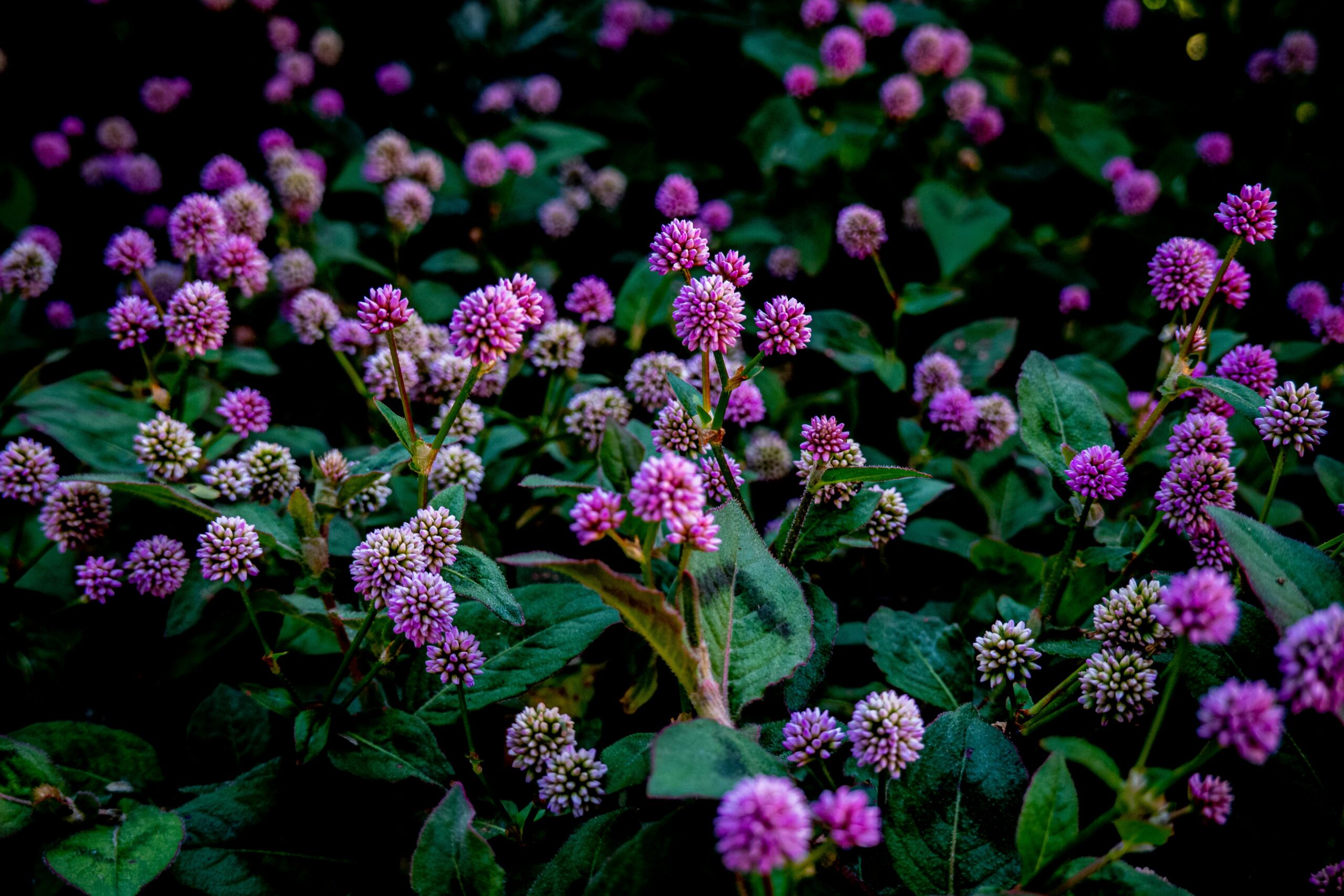
7. Red Bistort
Why It Gets Confused
Red bistort is closely related to Japanese knotweed and shares similar leaf shapes.
Key Differences
- Much smaller overall size
- Shorter stems
- Pink flower spikes instead of creamy plumes
- Less aggressive growth
This plant is often used ornamentally.
8. Broad-Leaved Dock
Why It Gets Confused
Dock plants have large leaves and thick stems that raise alarm.
Key Differences
- Leaves grow in a basal rosette
- No hollow bamboo-like stems
- Brown seed heads instead of white flowers
- Deep taproot, not spreading rhizomes
Dock is common and easy to manage.
9. Lilac Shoots
Why It Gets Confused
New lilac growth can look similar in early spring.
Key Differences
- Woody stems
- Paired leaves growing opposite each other
- Fragrant purple flowers in season
- Bush-like growth form
Lilacs are long-lived shrubs, not invasive weeds.
10. Willowherb
Why It Gets Confused
Tall growth and quick colonization cause panic.
Key Differences
- Narrow leaves
- Pink or purple flowers
- Soft, flexible stems
- Grows in disturbed soil
Willowherb often appears after construction or soil movement.
Seasonal Changes That Increase Confusion
Spring
- Many plants emerge rapidly
- Stems are softer and less distinct
- Leaves are not fully developed
This is the most common time for misidentification.
Summer
- Flower structures provide clearer clues
- Height and growth pattern become obvious
Autumn
- Knotweed flowers appear
- Other plants may already be dying back
Winter
- Knotweed leaves die off, leaving bare canes
- Many mistaken plants disappear entirely
If the plant vanishes in winter, it is not Japanese knotweed.
How Professionals Identify Japanese Knotweed
Experienced surveyors do not rely on one feature alone.
They assess:
- Stem structure and nodes
- Leaf attachment and shape
- Growth pattern and density
- Root exposure (if visible)
- Seasonal behavior
Photos alone are often misleading. Context matters.
What to Do If You Are Unsure
Step 1: Do Not Panic
Most suspected cases turn out not to be Japanese knotweed.
Step 2: Observe Over Time
Watch how the plant behaves:
- Does it die back completely?
- Do stems turn woody?
- Does it spread underground?
Step 3: Take Clear Photos
Capture:
- Full plant height
- Leaf shape close-up
- Stem joints
- Growth area
Step 4: Seek Expert Advice
Local extension services, ecologists, or invasive species specialists can help confirm identification.
Avoid instant chemical treatment until you are certain.
Common Myths About Japanese Knotweed Look-Alikes
Myth 1: “All Tall Plants With Hollow Stems Are Knotweed”
False. Many plants have hollow stems.
Myth 2: “If It Grows Fast, It Must Be Knotweed”
False. Speed alone is not proof.
Myth 3: “Knotweed Is Everywhere”
False. While widespread, it is often overreported.
Myth 4: “Online Images Are Enough”
False. Lighting, season, and angle can mislead.
Long-Term Risks of Mislabeling Plants
Misidentification can stay on records for years. This may affect:
- Property surveys
- Mortgage approvals
- Insurance costs
- Land management plans
Once something is labeled as knotweed, removing that label can be difficult, even if it was wrong.
Ecological Value of Mistaken Plants
Many plants confused with knotweed:
- Support pollinators
- Stabilize soil
- Improve biodiversity
- Provide wildlife shelter
Destroying them unnecessarily weakens local ecosystems.
Final Thoughts: Knowledge Prevents Costly Mistakes
Japanese knotweed is a serious issue—but not every tall plant is the enemy.
Accurate identification requires:
- Patience
- Observation
- Understanding plant structure
- Expert input when needed
By learning the differences between Japanese knotweed and its look-alikes, you protect yourself from unnecessary expense, stress, and ecological damage.
If you remember one thing, remember this:
Fear spreads faster than knotweed—but knowledge stops both.
Quick Takeaway Checklist
- ✔ Heart-shaped leaves with a flat base
- ✔ Hollow stems with clear nodes
- ✔ Zigzag growth pattern
- ✔ Persistent winter canes
- ✔ Aggressive underground spread
If all five are not present, it is likely not Japanese knotweed.